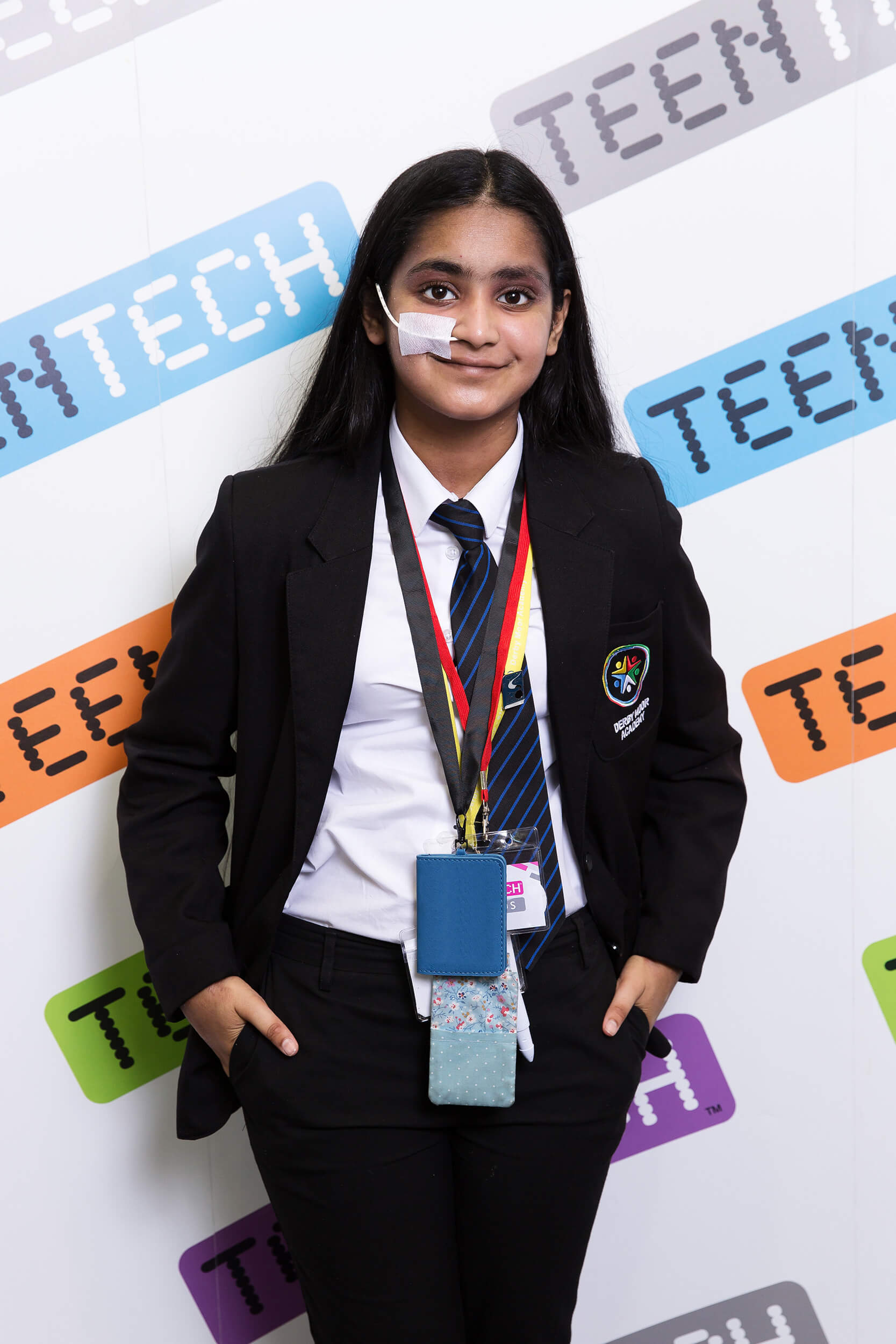
About Teen Tethics
There is growing recognition that engineering should be ethically principled and socially/environmentally responsible, but the views of young people are rarely collected and included in this debate.
TeenTethics provides a fresh way for engineers to engage with young people, encouraging engineers to listen and respond to young people rather than ‘present to’ or ‘talk at’ them. This project enables students with little or no understanding of engineering to confidently participate in discussions with engineers, revising preconceptions and increasing understanding and enthusiasm for the breadth of opportunities across the sector.
The project gave young people opportunity to develop a Young Person’s Charter for Ethical Innovation which is now embedded not only in the TeenTech Awards programme but being shared with engineers worldwide.
For the past year, over 700 TeenTech students have worked with engineers and explored the ethics of decision-making and trade-offs occuring during engineering and tech innovation.
Students who take part in the TeenTech Awards have always demonstrated ethical principles in their ideas and the project enables their voices to be heard
Key outcomes
- A launch event and workshops bringing together engineers and young people to explore different ways of communicating ethics and the ethical trade-offs which companies sometimes make.
- Workshops run in schools and colleges across England, Scotland and Wales where engineers worked alongside young people helping them articulate ethics they wished to see underpinning innovation.
- An event where 90 student representatives worked with engineers to analyse the data produced by 700 students in the workshops.
- The production and sharing of the Young Person’s Charter for Ethical Innovation. Students requested this be a fully inclusive, living document, enabling young people to amend and develop the recommendations.
The project worked with mixed ability students in Inverclyde, Oldham, Cardiff, London, Leicester and Derby, prioritising schools and colleges with a high number of students receiving free school meals or in areas with multiple indices of disadvantage. Events were fully inclusive and reached students underrepresented in engineering in age from 10 – 18.
To find out more about this project, read our case study and hear more from the project team.