About Defending Our Futures
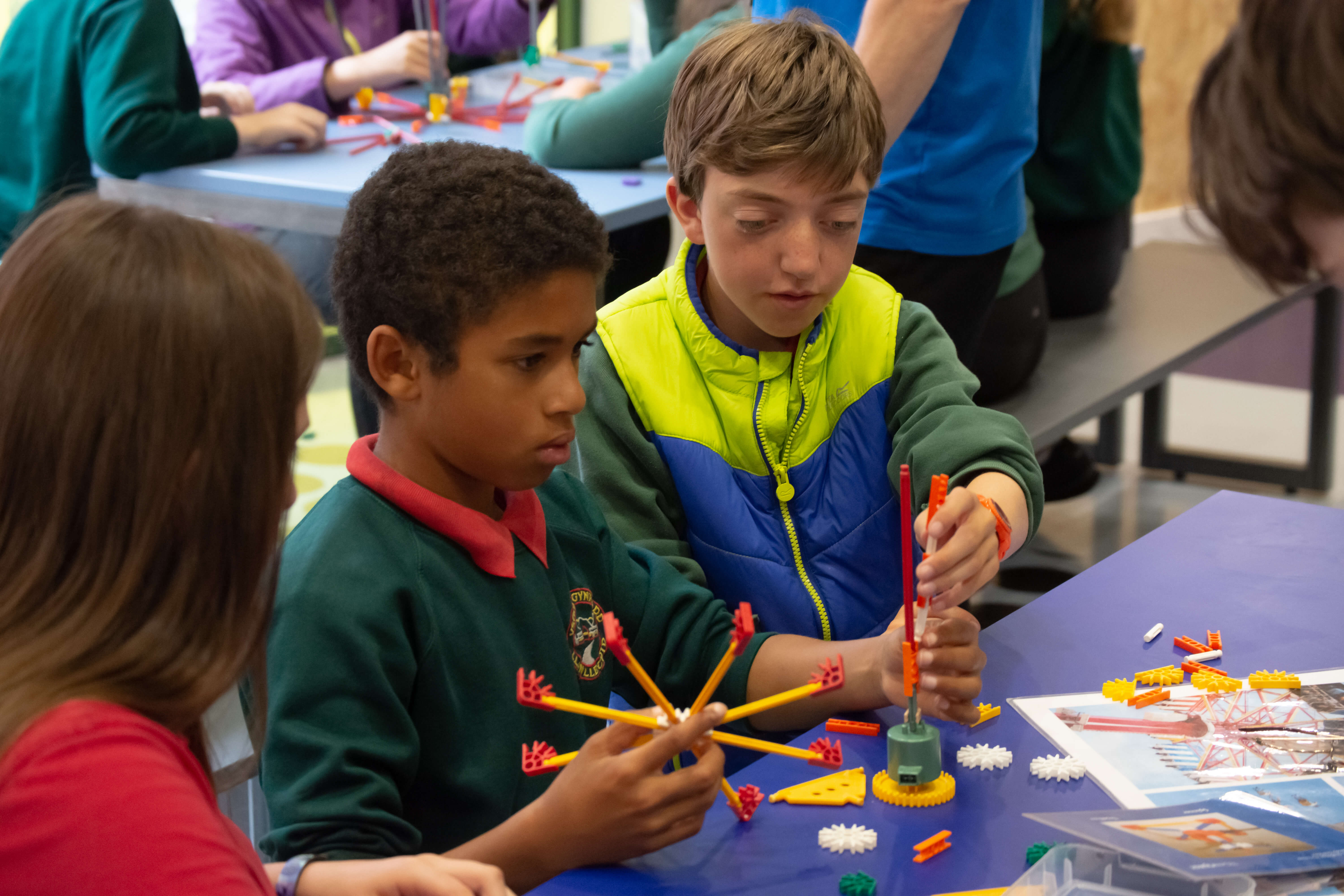
Defending our Futures is a collaboration between science communicators at Xplore! and apprentice electrical engineers at Defence Electronics and Components Agency (DECA). The project involved training the engineers in public engagement, co-creating workshops for school audiences, and co-delivering them to schools in areas of high deprivation. A package of three workshops on the themes of communication, navigation and target acquisition were developed based on the work of DECA.
DECA repair, reuse and recycle military equipment and components contributing to the sustainability of our armed forces and their ongoing ability to defend our country and people. The engineers work on equipment used in all three domains of the military – land, sea and air – including components from aircraft, ships and weapon systems.
The cross-curricular workshops included how military communications have changed across history from world war field telephones to Fire Fighter helmets with built in cordless communications, use of infra-red devices and lasers for “painting” targets and weapon guidance systems, and a board game style navigation challenge for teams.
The target audience was schools in the top 20% most deprived neighbourhoods in the Welsh Index of Multiple Deprivation, allowing to reach the most underrepresented audiences. This in turn works towards closing the attainment gap and supporting those who need it most.
Key outcomes
A key aim of the project was changing perceptions to believing that engineering is ‘for people like me’. To facilitate this, all the engineers developed and delivered a “My Story” piece giving an overview of their journey into engineering and what it meant to them. The diversity of the engineers and their stories made them relatable figures to the pupils. allowing them to see how many different pathways and entry points are available in engineering careers.
The engineers all participated in public engagement and communications training to prepare them for this and to support them in the future in various aspects of their apprenticeships. The scope of this project, in terms of the content being developed, was challenging primarily due to the expertise on the engagement and engineering aspects being with the different parties involved.
This necessitated more sessions for training, knowledge sharing and content development than originally planned which lead to more sharing and learning on both sides and developed the skills of all involved. The overall outcomes showed that the project was well received and that the majority of participants felt more positively toward engineering.