Symposium overview
The Green Skills symposium, Accelerating the green transition through skills and innovation, took place from 11 to 13 February 2026 in Nairobi, Kenya. The event was organised by the Royal Academy of Engineering in partnership with the United National Environmental Programme (UNEP), the Alliance for Greening Skills and Opportunities (AGSO) and Jacob’s Ladder Africa and was funded by the UK Government’s Department for Science, Innovation and Technology.
Read the full event report here.
The event convened policymakers, innovators, practitioners, industry and civil society players from across sectors globally to explore innovative, context-appropriate, and sustainable strategies to strengthen a green transition, with a particular focus on innovation, transformation of the informal economy and required skills. Using Kenya as a case study, discussions were then broadened to include global perspectives.
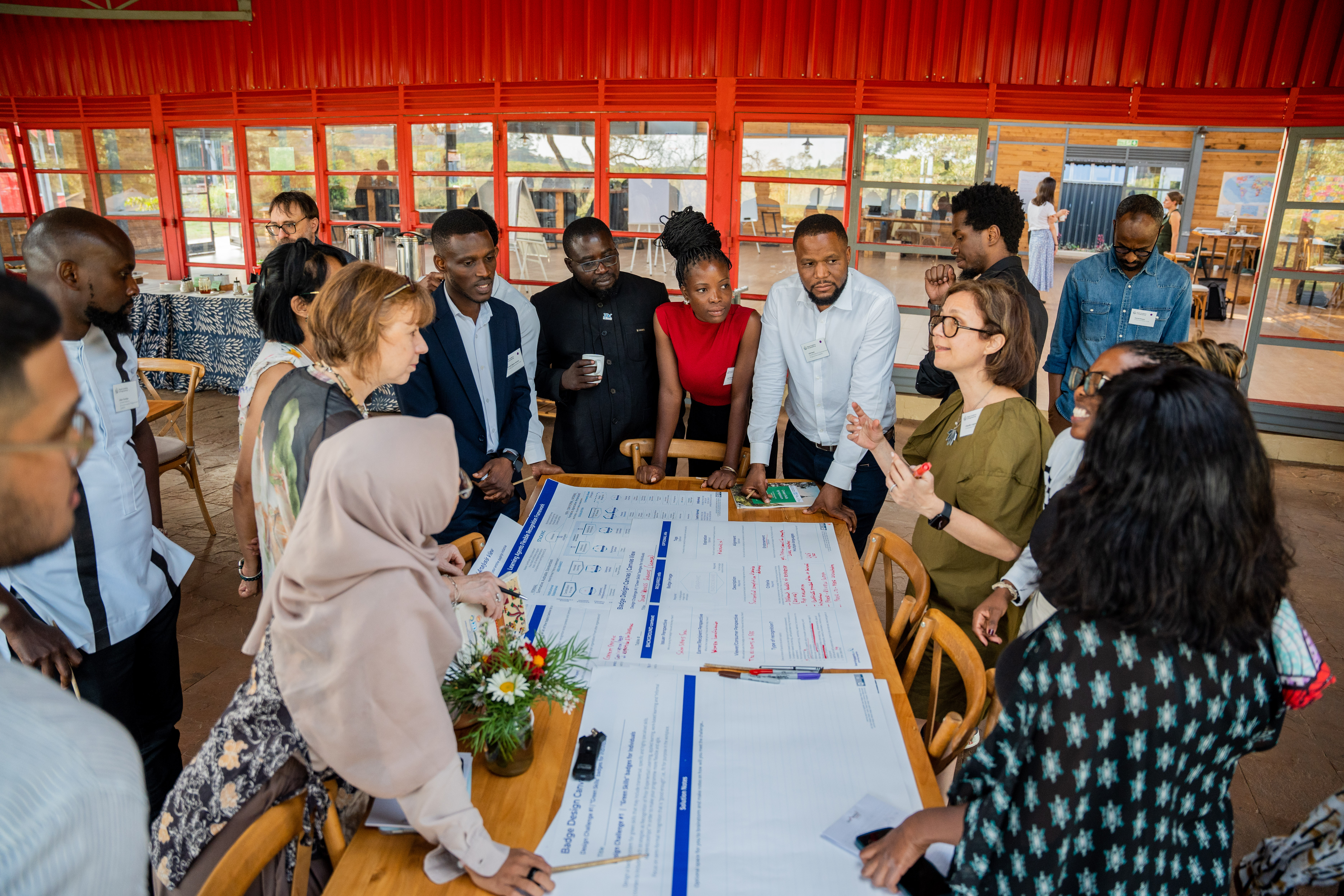
The event aimed to offer a unique opportunity for delegates across sectors to connect and network with experts from around the world, and to explore cross-cutting issues through three sub-themes:
- Advancing the green transition through innovation and business models - explores innovation and business models across different sectors such as green energy and construction. Discussions focused on sectoral innovation, sustainable scaling and context-specific models.
- Strengthening certification pathways for decent jobs in the informal economy - focused on the process of assessing, certifying, and identifying the skills and knowledge acquired regardless of how, when, or where they were obtained, to improve access to decent work in the informal economy through the Recognition of Prior Learning (RPL) framework. The aim was to explore current challenges, including the lack of formal recognition and the mismatch of skills in the informal sector, and look ahead to ways to scale recognition systems in sectors such as green energy and construction. Strengthening partnerships and engaging informal worker representatives will be essential to institutionalising certification and ensuring it reflects real experiences and needs.
- Participatory approaches to bridging the skills gap - investigated how specific sectors and partnerships (like AGSO) can bridge skills ecosystems to ensure that the skills needed for the green transition are in step with real market demand. Participants were given the opportunity to explore innovation and business models, and community/stakeholder engagement that generates inclusive and relevant solutions.
Symposium format
- Event structure: at the core of the event were three cross-cutting, challenge-led sessions that bridge different sectors and expertise.
- Participants arrived on the evening of 10 February, with a welcome dinner and evening of networking to start the event.
- Participants represented a variety of disciplines (i.e. not just for engineers) and sectors, from around the world.
- Event cost: There was no cost to participants for attending the event. Frontiers welcomes a diverse group of participants and offers to cover your travel, accommodation and subsistence costs during the event. We actively encourage candidates from a diverse range of backgrounds. Please note we do not cover usual salary costs.
Post-event funding
Seed funding grants worth £20,000 over one year were awarded to successful collaborations developed via the symposium. Read more about the successful projects here.
Why a green skills symposium?
The Green Skills Symposium addresses the urgent need for skills and systems to enable a just and effective green transition in Kenya, sub-Saharan Africa and across the globe. It aligns with Kenya’s National Strategy on Green Skills and Jobs (2025–2030), which seeks to integrate education, employment, and innovation with climate and development goals.
Key challenges include:
- Mismatch between green skills supply and demand in sectors like solar energy, climate-smart agriculture, and waste management.
- Fragmented efforts across government and private sector.
- Limited recognition of informal sector skills.
- Low public awareness and weak integration of green principles in governance and education.
The AGSO National Green Skills Gap Baseline Survey provides evidence on training, certification, and market gaps, emphasizing participatory approaches involving communities, employers, and policymakers.
The symposium serves as both a consultative platform for the survey and a launchpad for global dialogue, convening stakeholders to co-design solutions, share innovations, and build partnerships to accelerate the green transition in Kenya and beyond.
Partners
The event is brought to you by the Royal Academy of Engineering in partnership with the United National Environmental Programme (UNEP), the Alliance for Greening Skills and Opportunities (AGSO) and Jacob’s Ladder Africa and is funded by the UK Government’s Department for Science, Innovation and Technology.